

The Brady Bunch: Non-Traditional Families and the Importance of Estate Planning for the Future
Attorney Haley Matson
She was a divorced woman with three daughters. He was a widowed man with three sons.
Their large blended family was a staple of American televisions for years. Although they made it look easy, blended families need special attention when estate planning to ensure that everyone is included. Parents will want to make sure that their blended kids are all taken care of after they pass away, and the kids will be wondering what their inheritance will end up amounting to.
Here, we will do a short look at the Brady family and explain how their estate plan may look without a will or a trust. For parents, information about giving all the kids inheritance will be paramount, while for kids, information about inheriting from a deceased or divorced parent will be important.
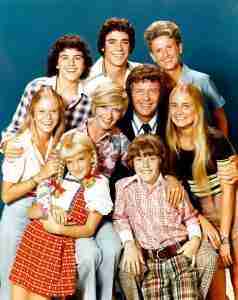
The Brady Bunch
Mike Brady is a widower with three sons from his previous marriage with his deceased spouse.
- Greg
- Peter
- Bobby
Carol Brady is a divorced woman with three daughters from her previous marriage with her divorced ex-spouse.
- Marcia
- Jan
- Cindy
Without an Estate Plan
Blended families without wills are going to be the most disadvantaged. Children from a previous marriage or prior to marriage will not be automatically included in the Estate of the non-biological or non-adoptive parent without a will or a trust stating otherwise. This means that Mike’s children would not inherit anything from Carol unless she had a will stating otherwise, and Carol’s children would not inherit anything from Mike unless he has a will stating otherwise.
If we pretend that they were from North Carolina, we can look to the North Carolina Rules of Intestate Succession, which is held in the North Carolina General Statutes Chapter 29.
The House
We will also assume that the home is owned jointly as tenants in common, where Carol owns 50% of the house, and Mike owns 50% of the house. Although this seems far fetched, this is a very common situation when a subsequent marriage or marriage at a later stage of life occurs, when proper estate planning has not been put into place.
If Mike passed away with no will, his 50% interest in the house would be split up into 3rds. Carol, the spouse at the time Mike passed away, would inherit 1/3 of that 50% – Roughly a 1/6 interest in the house, or 16.67%. The three boys would inherit the other 2/3 equally, which equals a 1/9 interest in the house for each boy, or 11.11%. This means that Carol, in total, would own 66.67% of the house, while the boys would each individually own 11.11%. Carol’s girls would not inherit any interest in the house. Carol would also not own the entire house outright.
Likewise, if Carol passed away with no will, Mike would own 66.67% of the house, and each of her girls would own 11.11% each. Mike would not own the house outright.
Personal Property
Once either Mike or Carol passes away, technically their spouse and surviving heirs are also entitled to the personal property. Personal property includes things like furnishings, financial accounts that are not jointly owned or beneficiary designated, and vehicles.
If Mike passed away with no will, Carol, as the surviving spouse, would be entitled to inherit the first $60,000 of personal property. If Mike passed away with $59,999, Carol would be entitled to 100% of the personal property. If Mike passed away with over $60,000, Carol would be entitled to the first $60,000 of personal property, plus 1/3 of the amount remaining afterward. For example, if Mike passed away with $120,000, Carol would receive $60,000, and then an additional $20,000, for a total of $80,000. The boys would each split the remaining 2/3 of personal property, so each would receive $13,333.33. The girls would receive nothing from Mike’s passing.
Again, if Carol passed away with no will, the numbers would be the same but for the opposite side, with Mike getting $60,000 + $20,000 of personal property, and each of her three girls getting $13,333.33. If Carol passed away, the boys would receive nothing.
With Proper Estate Planning
Most families would not be happy with the above split of real property and personal property. Not only does it not allow the spouse to have 100% of the home, it also splits up personal property, and does not give anything to the children who are part of the family, but have not yet been formally adopted. Many clients assume that if they get married, then their kids on each side will be automatically included in the pool for inheritance. Unfortunately, that is not the way that it works.
If Carol and Mike would have legally adopted all six children, then all six children would inherit from either parent if they passed away. With no will, their percentages would be even less, but they would all still inherit. Luckily, this is completely avoidable with prudent estate planning and management.
Deed for the Home
If getting remarried or married at a later stage of life, if you want your house to go 100% to your spouse when you pass away, you can make sure your deed to the house lists both parties, and says “as husband and wife” or “as tenants by the entirety.” This will allow the surviving spouse to inherit 100% of the home after their spouse passes away. This also avoids the need for probate, as the house is immediately in the surviving spouse’s interest.
Wills and Trusts
A will overrides the North Carolina Rules of Intestate Succession. If you are in a blended family and do not want to adopt your spouse’s children, but still want them to inherit, a properly written will allows you to give whatever you would like to whomever you would like. When writing a will, you can also customize the amounts, percentages, or specific items that each person receives from you.
If you had a nanny, caretaker, close family member, or best friend that you would like to leave something to, a will allows that to happen. Without a will, only your direct biological or adopted heirs will inherit. With a will, you can direct your property to go to whomever you wish.
A trust will also override the North Carolina Rules of Intestate Succession, and property will be distributed based on the terms written in the Trust by the Trustee. Similar to a will, you can customize the language and allow property to go to whomever.
What about the Kids? Can they inherit from a deceased parent of a past marriage or a divorced ex-spouse?
A child who has divorced parents, but is either a biological child of both parents or has been legally adopted by both parents, is entitled to inherit from both parents, regardless of if they are divorced. However, if one parent remarries and the new spouse subsequently adopts the child, that child is no longer considered an “heir” of the previous parent, and will not be entitled to inherit from them.
If a child has married parents, and one parent passes away, the child is entitled to inherit from the deceased’s estate. If the surviving parent later remarries and the child is adopted by that new spouse, the child may inherit from the new parent as well.
Both of these scenarios are assuming that the parent(s) do NOT have wills. If the parents have wills, then any number of things can happen. Most frequently, we see that children who have been subsequently adopted will still be included by their original parent in that original parent’s will or trust. In these situations, YES, the child is entitled to inherit from the will. We will also see families who had no idea that their blended kids were not automatically included, to which we always suggest creating a comprehensive estate plan.
McIntyre Elder Law Can Help
We are an experienced law firm that works near-exclusively in estate planning. Estate planning includes wills, trusts, powers of attorney, living wills/advanced directives, guardianships, will contests, trust contests, and benefits for assisted living and long term care. While we are called “McIntyre Elder Law,” we serve clients of all ages. In fact, the most opportune time to work on your estate plan is when you are between the ages of 35 and 50– when you might have minor children, and your career and savings are growing exponentially.
To create a will and a greater estate plan, please schedule an appointment with us, so that we can go over your assets, family, and plans together to create a comprehensive future for you and your loved ones.
📍 Offices in Shelby, Charlotte, and Hendersonville
📞 Call us at 1-888-999-6600
🌍 Visit our website: www.mcelderlaw.com
Don’t wait until it’s too late—take control of your future today!
Attorney Haley Matson
Estate Planning & Elder Law Attorney
McIntyre Elder Law
Charlotte, NC


