

Unmarried Partner Died in North Carolina — What Are My Rights?
Attorney Haley Matson
There are many reasons to be together as partners, but not actually legally get married. However, being unmarried when your partner passes can present some extremely tough legal issues. Most of these issues can be resolved with proper planning in place.
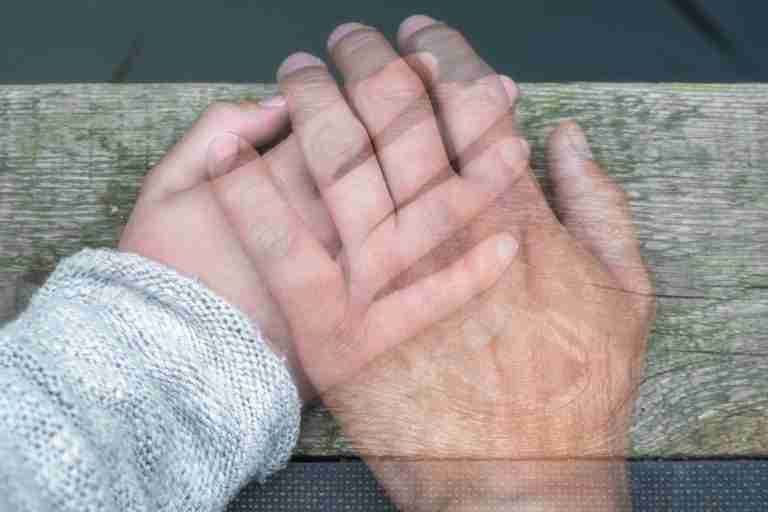
Unmarried Couples: Their Rights
As an unmarried couple in North Carolina, neither partner will be entitled to anything out of the deceased partner’s estate by default. To receive something out of a deceased person’s estate, you must either be a legal heir, or you must be included in their Last Will and Testament or Trust, if they have one. “Legal heirs” in North Carolina include legally married spouses, children, grandchildren, parents, and siblings.
Without a proper Last Will and Testament or Trust, as an unmarried person, you are not considered a legal heir and are not legally entitled to anything. This means that you will not have the legal ability to force any of the surviving heirs to give up their inheritance. You will not have the legal right to deal with the burial or cremation of your partner. You will also not have any authority to manage any of their remaining property, even if you lived together, unless you have been included on the deed to the property, with rights of survivorship.
If you have been listed in a Last Will and Testament, you will be entitled to a share of the deceased partner’s estate, to the extent that is outlined in the Will. For example, if your partner left everything to you in the Will, then you are entitled to everything that the partner left after the Will is probated. However, if the deceased partner only left you a car and $500, that will be all you are entitled to. Likewise, if you are a beneficiary or co-Trustee of that partner’s trust, then you will have duties as a Trustee or will receive some assets as a beneficiary. If you are not listed, you are not entitled to anything.
What About Common Law Marriage? Domestic Partnerships?
Common Law Marriage, while frequently referred tom does not actually exist anymore in North Carolina. However, if you have a valid common law marriage from a state which still recognizes it, and you move to North Carolina, the North Carolina courts will recognize it as a legally valid marriage.
Likewise, a “domestic partnership” which some cities or states allow you to register, also does not have any legal standing in North Carolina to inherit anything
In either case, we strongly suggest that you and your partner visit an estate planning attorney to determine your specific rights and responsibilities, so that they can assist you in setting things up.
What's Included in My Partner's Estate?
Your deceased partner’s estate consists of any assets or personal property that is not jointly owned with rights of survivorship, is not designated with a payable on death beneficiary, and is not properly inside a Trust.
A common case is that unmarried partners had one joint checking account, but all of their other accounts were individually owned. None of the accounts had any listed payable on death beneficiaries. The house was lived in by both partners, but only one partner is listed on the deed to the property. There is a life insurance policy, but the beneficiary is one of the partners’ siblings. There is a car that is used by both parties and both parties are on the insurance, however, only one of them is on the title.
In this case, the surviving partner would be entitled to the balance of the joint bank account, but would not be entitled to the deceased partner’s individual bank accounts, the house, or the life insurance policy. The survivor would also not be entitled to the car, if the deceased partner’s name was the only one on the car title, despite both using the car and being listed on the insurance policy.
The assets with no listed beneficiary or no joint title can only pass to the surviving partner if that partner is listed as a beneficiary, added as joint with rights of survivorship, or specifically mentioned in a Last Will and Testament or a Trust.
I Had Power of Attorney, Can I Use That?
In North Carolina, a power of attorney document’s authority extinguishes upon the principal’s death. Even if you had a power of attorney over your partner, once they pass away, that document is no longer active and cannot be used.
How Can We Ensure that We Get Each Other's Property?
The first, and most successful technique is to see an Estate Planning or Elder Law attorney who can draft up a Last Will and Testament, Powers of Attorney, new deeds, and maybe even a Trust. An attorney can also assist you with filing or requesting reimbursement for certain payments made, for example, improvements to the house. Some things are fact specific, so it is extremely important to speak with a professional.
Otherwise, we encourage you to explore the payable on death beneficiary options for your financial institution and insurance accounts.
McIntyre Elder Law Can Help
At McIntyre Elder Law, we work hard to save your hard earned assets and assist with multiple areas of Estate Planning, like wills, trusts, probate, litigation, and benefits. You can sit down with an attorney at any of our three offices, where we’ll go over your individual needs and create an individualized estate plan for you.
📍 Offices in Shelby, Charlotte, and Hendersonville
📞 Call us at 1-888-999-6600
🌍 Visit our website: www.mcelderlaw.com
Don’t wait until it’s too late—take control of your future today!
Attorney Haley Matson
Estate Planning & Elder Law Attorney
McIntyre Elder Law
Charlotte, NC


